Deconstructing faith toward liberation
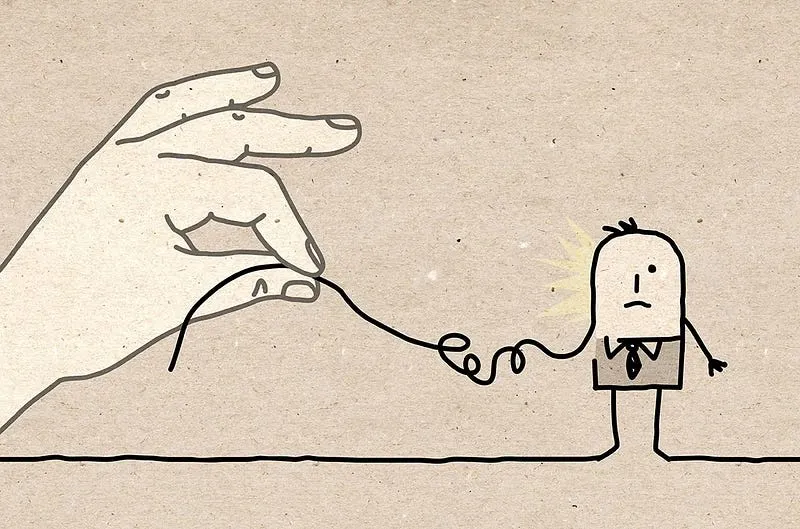
Growing up Pentecostal meant fervent prayer sessions, vibrant worship music, speaking in tongues, and a deep sense of community. However, as I delved deeper into the meaning of faith and the world around me, questions arose, and a nagging dissonance grew. This essay explores faith deconstruction and the vital role it plays in creating true Diversity, Equity, and Inclusion (DEI) for all religious identities.
The 2006 Academy Award-nominated film Jesus Camp offers a glimpse into what it was like to grow up in the Pentecostal faith. While the film portrays a summer at a Pentecostal youth camp with exuberant worship and passionate preaching, it doesn’t encompass the full spectrum of the Pentecostal experience. For me, Pentecostalism was the foundation of my childhood faith, a foundation that eventually cracked as my own curiosity and critical thinking skills developed.
My faith deconstruction began in my early teens, alongside the blossoming of my queer identity. It wasn’t a sudden conversion away from religion, but a slow unraveling as I discovered thinkers like Karl Marx. Marx, though not without his critics, challenged me to view religion not just as a source of comfort and community, but also as a social construct, a tool sometimes used to maintain power structures. This resonated deeply with my own experiences within the Pentecostal church, where certain interpretations of scripture felt more about control than genuine connection with the divine.
[Religion is] the expression of real suffering and a protest against real suffering. Religion is the sigh of the oppressed creature, the heart of a heartless world, and the soul of soulless conditions. It is the opium of the people. — Karl Marx
Despite my eventual atheism, this essay isn’t a blanket critique of religion itself. Faith is a deeply personal experience, a unique path individuals navigate in search of meaning and purpose. Psychologist James Fowler’s stages of faith development highlight this universality — humans, regardless of background, tend to grapple with existential questions and build their own frameworks of belief. Growing up in a church offered ready answers and a sense of belonging, but it also limited my questioning. My faith deconstruction stemmed from a desire for truth, a truth that transcended blind acceptance of established doctrines.
This deconstruction, however, wasn’t without its challenges. The Pentecostal church, with its emphasis on spiritual warfare against unseen forces, left scars. Over time, I realized my resentment wasn’t directed at Christianity itself, but at the racist and colonial underpinnings on which much of modern Christianity was built. True liberation, I believe, requires dismantling these oppressive systems, not just within religion, but in society as a whole. Faith, when used for liberation, can be a powerful tool, but it can also be weaponized to uphold hierarchies and marginalize others.
Thankfully, my journey wasn’t confined to the walls of the church. Experiences outside, building relationships with people of diverse faiths, and learning about indigenous traditions like Shoshone spirituality broadened my perspective. Deconstructing my faith allowed me to appreciate the beauty and wisdom in other religions, even if I didn’t subscribe to their core tenets. For example, while I may not believe in prayer in the same way someone else does, if I know that it will bring them comfort to know that I am praying for them, I will do so — in my own way — and let them know. It’s about respecting their beliefs and acknowledging the importance faith plays in their lives.
This newfound appreciation translates into action in my work as a DEI practitioner. While acknowledging religious holidays is a start, true religious inclusion requires a deeper understanding of religious cultures and practices. It’s about respecting dietary restrictions, understanding etiquette around space, physical contact, prayer, sacred garments, or phrases/traditions around grief or celebrations, and creating spaces where people feel safe expressing their faith, whether it’s through silent meditation or prayer, singing hymns, or participating in elaborate religious ceremonies. It’s about fostering genuine connections, and recognizing that religious oppression intersects with other forms of marginalization, like racism, sexism, and homophobia. Someone who is Muslim and experiences Islamophobia might also be a person of color facing racial discrimination. Understanding these intersecting oppressions allows for a more holistic approach to DEI work.
The dangers of religious nationalism are a stark reminder of the potential misuse of faith. Nationalism, as Carlton Hayes suggests, can morph into a religion itself, weaponizing religion for political gain. These movements, like White Christian Nationalism here in the US, peddle hate and division, a stark contrast to the core message of love and peace that many religions share. They hijack religious narratives to serve their own agendas, often promoting violence and discrimination against those who don’t conform to their narrow interpretation of faith.
It’s crucial to distinguish between religious nationalism and genuine faith. To say that Zionism is Judaism, White Christian Nationalism is Christianity, or Islamism is Islam is not only insensitive but factually incorrect. Criticizing Christian nationalism isn’t anti-Christian any more than criticizing Zionism is antisemitic or criticizing Islamism is Islamophobic. Religions such as Christianity, Judaism, Islam, Hinduism, and Buddhism encompass a wide range of beliefs and practices, and conflating these religions with their most extreme and politicized factions is a dangerous oversimplification. True faith is about compassion, understanding, and a commitment to justice. Religious nationalism is the antithesis of these values.
The roots of religious nationalism can be traced back to colonialism and its impact on the global religious landscape. Colonial powers often used religion as a tool to control and subjugate indigenous populations. The legacy of this continues today, with religious nationalism often intertwined with racism and imperialism as well as religious supremacy. The fight for liberation necessitates challenging these narratives. Faith deconstruction, though sometimes painful, is a necessary step in this pursuit. By deconstructing the power structures embedded within religious doctrines, we can create a more just and equitable world.
Diversity, equity, and inclusion efforts often neglect religion, but true inclusion requires understanding how faith intersects with power structures. Religion can be a source of both oppression and liberation. An interfaith approach, coupled with religious literacy, is key to building spaces where everyone feels like they belong. This means fostering dialogue and understanding between different faiths and creating spaces where people can share their beliefs and practices without fear of judgment.
This journey of deconstructing faith has been a lifelong quest, but it has also been a path toward liberation and empathy. It’s about creating spaces where everyone, regardless of their faith background, can flourish. It’s about recognizing the shared humanity that binds us all and building a world where religious freedom goes hand in hand with respect, understanding, and social justice.